
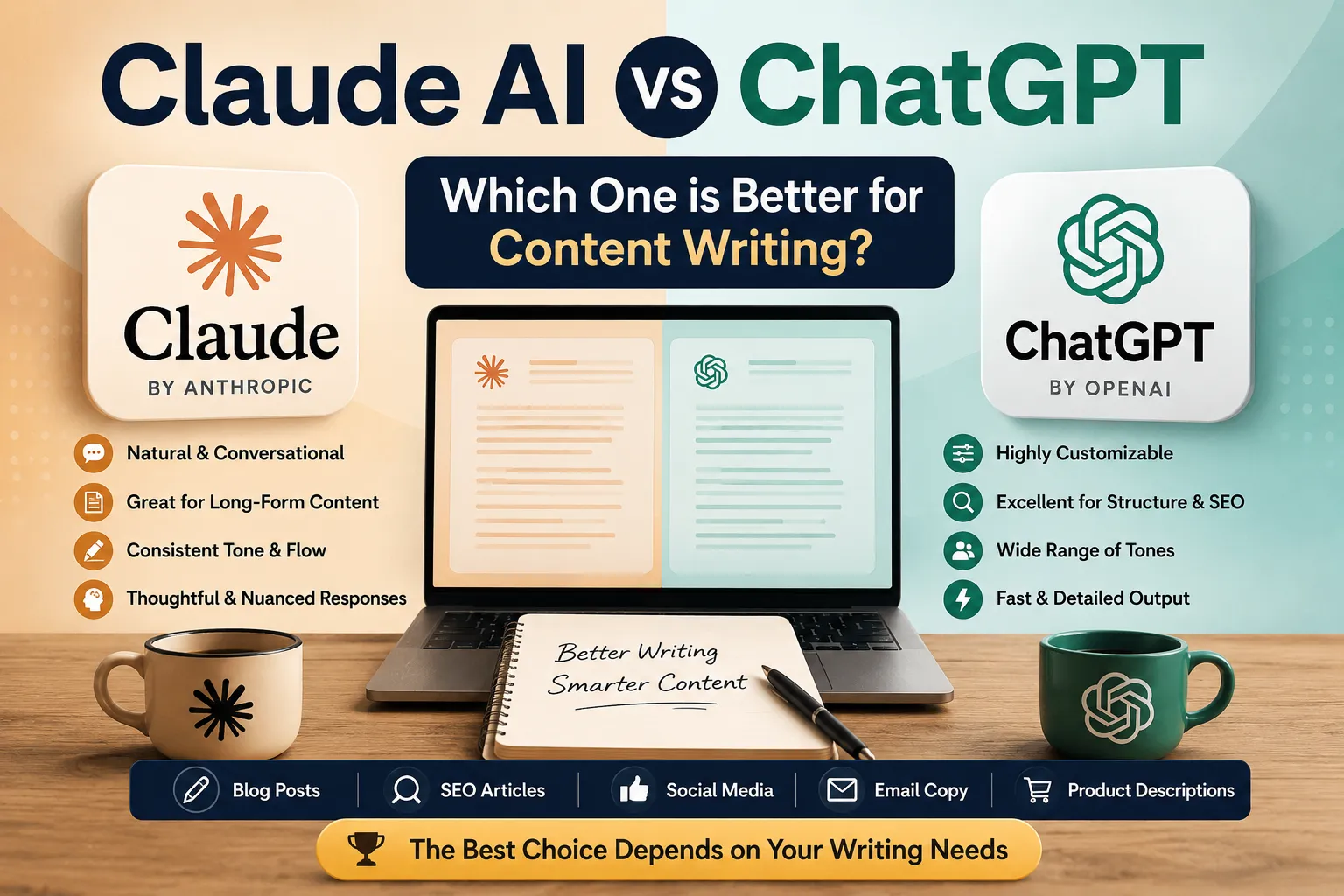
Claude AI vs ChatGPT: Which One Actually Works Better for Content Writing?
AI writing tools have quietly become part of how content gets made. Bloggers use them to move faster. Marketers lean on them when deadlines stack up. Business owners who never thought of themselves as writers now publish regularly because of these platforms.
Two names keep coming up: Claude and ChatGPT.
I spent several weeks running through real work. Not five-minute demos. Actual publishing tasks. A 2,300-word remote work guide, product comparison drafts, email newsletter copy, SEO articles with specific keyword targets, and editing passes on pieces that were already live. I expected the differences to be surface-level. What I found was that each tool has a genuinely distinct working style, and that style becomes clear only after you push past the basics.
The useful question was never which one is “better.” It was which one fits a specific type of work better


Understanding the Two Platforms
Claude is developed by Anthropic. ChatGPT is built by OpenAI. Both generate text, help polish drafts, and assist with structuring information. The feature overlap is significant enough that many writers pick one purely based on which name they heard first.
The gap shows up in actual use. Claude tends to write with a consistent, natural voice that needs less correction after the first pass. ChatGPT responds very precisely to instructions and builds almost exactly what you describe in the prompt.
One way to think about it: Claude brings judgment to the page. ChatGPT executes direction. Depending on how you prefer to work, one of those will suit you considerably better than the other.
First Draft Quality
The first draft is where you either save an hour or create extra work for the rest of the day.
When I used Claude for a beginner’s guide on remote work, the output came back warm and readable. Transitions felt intentional. Paragraphs connected without awkward gaps. I barely touched the structure before it was publishable.
ChatGPT on the same brief returned a tighter heading hierarchy and cleaner SEO formatting, but the tone came out slightly stiff for a beginner audience. The structure was genuinely better organized. The voice needed a full rewrite pass to feel human.
That test captured the core difference well. Claude focuses on how writing feels. ChatGPT focuses on how writing is organized. Both matter. They just do not get equal attention from each tool.
One limitation I noticed with Claude: on highly technical topics, it occasionally became overly cautious and added unnecessary hedging. Sentences like “it’s important to note that results may vary” showed up in places where a direct statement would have served the reader better. Straightforward editing fixed it, but it happened enough to notice.
Writing Tone and Style Range
Claude defaults to a calm, grounded voice. It suits content where building reader trust is the priority. Personal finance, wellness, beginner tutorials, opinion pieces. The writing rarely sounds manufactured.
ChatGPT covers more ground. Formal business reports, punchy ad copy, technical documentation, casual blog posts. It moves between these without much trouble when the prompt is specific enough. Writers managing several client accounts at once tend to find this range genuinely useful.
That said, without a tone instruction, ChatGPT defaults to something generic and slightly stiff. I ran the same topic through it several times with short prompts, and the tone shifted noticeably between attempts. Sometimes measured and formal, sometimes almost conversational, with no clear reason for the difference. Claude, without tone guidance, still makes consistent choices. That reliability is worth something when you are working under a deadline.
Long-Form Content and Consistency
Keeping a 2,000-plus-word article coherent from start to finish is harder than it looks. The voice should not drift. The logic should build toward something. The reader should not sense that two different people wrote the introduction and the conclusion.
Claude handles this naturally. I ran a 2,300-word affiliate marketing guide through both tools using identical outlines. Claude produced a draft that read as one continuous piece. Tone held through the ending without any noticeable shift.
ChatGPT’s version had stronger individual sections but needed connecting work between headings. Per-section quality was excellent when I provided detailed notes for each heading. Getting the whole thing to read as unified required an extra editing pass.
Prompt format matters far more for ChatGPT on longer content than most people realize. The same topic with a vague brief versus a structured outline produced results that seemed to come from different tools entirely.

Pricing and Value
This comes up constantly when people compare both platforms, so it is worth covering directly.
Both tools offer free plans. Claude’s free tier gives access to its standard model with some daily usage limits. ChatGPT’s free tier runs on GPT-3.5 with limited access to GPT-4 features.
Paid plans for both sit around $20 per month at the time of writing. Claude Pro unlocks higher usage limits and priority access. ChatGPT Plus gives access to GPT-4, image generation through DALL-E, and browsing capabilities.
For content writers, the paid plan on either tool tends to pay for itself quickly if you are publishing regularly. The free tiers are genuinely usable for occasional work, but daily writers will hit the limits fast.
If budget is the deciding factor, both are similarly priced at the paid tier. The choice between them should come down to workflow fit rather than cost.
SEO and Structured Content
Search-focused writing has specific requirements. Keywords need to land without feeling planted. Headings need to signal topic structure. Meta descriptions need to earn the click.
ChatGPT follows formatting instructions precisely. Tell it to include a target phrase in the introduction and a specific H2 structure, and it delivers consistently. For SEO content writing where hitting structural targets is part of the brief, this is a genuine advantage.
Claude produces readable, well-paced articles that can rank, but it leans toward natural flow when there is tension between readability and placement. It follows keyword instructions when given them directly. Without that direction, it will make its own call, which is not always the right one for SEO purposes.
A quick look at how both handle common writing tasks:
| Task | Claude | ChatGPT |
|---|---|---|
| Natural first draft | Strong | Needs a detailed prompt |
| SEO structure compliance | Moderate | Strong |
| Long-form voice consistency | Strong | Good when outlined |
| Tone flexibility | Moderate | Wide range |
| Editing without overwriting | Strong | Can be aggressive |
| Brainstorming volume | Moderate | High output |
Editing Existing Drafts
Claude tends to preserve what is already working. If a draft has a rhythm or a phrase worth keeping, it usually works around those rather than replacing everything. I appreciated this when polishing pieces that had a solid foundation but needed a few rough sections cleaned up.
ChatGPT rewrites more thoroughly. Hand it a poorly structured draft and ask for improvements, and it may rebuild entire sections from scratch. Useful when a piece genuinely needs structural surgery. Less useful when you asked for light edits and got back something you did not recognize.
After running the same rough drafts through both tools several times, I settled into a clear habit. Claude for polishing. ChatGPT for rescuing.
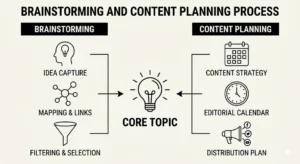
Brainstorming and Content Planning
ChatGPT has a clear volume advantage here. Ask for twenty blog post ideas in a specific niche, and you get twenty usable options in seconds.
Claude produces fewer suggestions but tends to include more context around each one. An idea might come with a suggested angle, the reader question it answers, or a note about why the topic is worth covering. The suggestions feel thought through rather than generated.
The workflow I settled on: use ChatGPT to generate a wide pool of ideas, then bring the strongest ones to Claude to develop into full briefs. Running both in sequence is faster than relying on either one exclusively.
Learning Curve
For someone new to AI writing tools, Claude is more forgiving. A simple, conversational prompt usually returns something usable. You do not need to master prompt structure to get a decent first draft.
ChatGPT rewards the time you put into learning how to write good instructions. Experienced users who know how to build detailed briefs often get results that are hard to match. Beginners without that foundation will find the output inconsistent at first.
Neither tool is technically difficult to operate. The real difference is how much preparation you are willing to do before the writing starts.
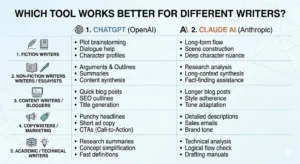
Which Tool Works Better for Different Types of Writers
Bloggers
Claude is the stronger starting point. First drafts come out conversational and readable without much prompt engineering. For niche sites or personal blogs where voice is the main thing readers connect with, Claude tends to produce work that needs less cleanup before it goes live.
Freelance Writers
Freelancers handling multiple client niches will likely end up using both. Claude works well when a client wants natural, human-sounding copy. ChatGPT is more useful when the brief comes with specific structure requirements or keyword targets. The ability to switch based on the job is worth having.
If your goal is to turn writing into income, this guide on “how to earn money through content writing“ covers practical starting points.
Agencies
Agencies managing several brands tend to get more out of ChatGPT’s style range and instruction-following. When you need one tool to produce formal legal content in the morning and casual lifestyle copy by afternoon, ChatGPT handles those shifts better. Claude can cover both, but it takes more prompting to change modes reliably.
Small Business Owners
For business owners without a writing background, Claude is easier to get value from quickly. Simple prompts return usable drafts. The tone tends to feel approachable rather than corporate, which matters for customer-facing content like service pages, about sections, and email sequences.
New writers looking to enter the industry may also benefit from learning “how to get their first content writing job“ before investing heavily in AI tools.
Which Tool Is Better for Different Content Types
| Content Type | Better Choice | Reason |
|---|---|---|
| Blog Posts | Claude | Natural tone, less editing needed |
| SEO Articles | ChatGPT | Follows keyword and structure briefs precisely |
| Product Reviews | ChatGPT | Handles structured comparisons cleanly |
| Email Newsletters | Claude | Conversational voice fits direct reader relationships |
| Content Briefs | ChatGPT | Strong at outlining and organizing structure |
| Editing Existing Drafts | Claude | Preserves original voice while improving clarity |
| Social Media Copy | ChatGPT | Wide tone range, punchy output |
| Long-Form Guides | Claude | Consistent voice across extended word counts |
These are tendencies, not guarantees. A well-crafted prompt can push either tool into territory it does not naturally favor. But if you are moving quickly and want reliable output without extra effort, the table above reflects what I ran into across multiple projects.

Strengths and Weaknesses
Claude
Works well for natural-sounding drafts, consistent long-form writing, and editing that respects the original voice. Occasionally adds unnecessary hedging in technical content. Less suited for high-volume idea generation or tight keyword placement without direct instructions.
ChatGPT
works well for precise instruction-following, varied tone requirements, and structured SEO content. Tone can shift unpredictably on short or vague prompts. Can over-edit drafts when a lighter touch was what the work actually needed.
Final Verdict
After weeks of real testing across blog posts, SEO articles, email copy, product reviews, and long-form guides, the honest answer is that neither tool has a clean overall win.
Claude is the better fit when the writing itself needs to feel natural. First drafts come out cleaner, voice stays consistent across longer content, and editing tends to respect what was already working. If your main output is personal content, beginner guides, newsletters, or anything where tone and trust drive reader engagement, Claude reduces the distance between draft and publish.
ChatGPT is the better fit when control and structure matter most. It follows briefs with precision, handles SEO-structured content with more discipline, covers a wider style range, and generates a large volume of ideas quickly. For agencies, freelancers with varied client rosters, or anyone doing structured content creation at scale, it offers more direct influence over the output.
Most experienced writers stop treating this as a competition at some point. They draft in Claude and structure or optimize in ChatGPT. That split covers most content creation needs without forcing either tool into a role it does not naturally fill.

Frequently Asked Questions
Q1. Is Claude better than ChatGPT for blogging?
For conversational or personal blogs, Claude tends to produce more natural-sounding drafts that need less editing before publishing. For structured posts built around specific search targets, ChatGPT follows formatting instructions more precisely. Which one fits better depends mostly on the type of blog and how much upfront direction you prefer to give.
Q2. Can both tools work together in the same workflow?
Yes, and many writers already do this. A practical approach is drafting in Claude for flow and voice, then using ChatGPT to tighten structure or check against specific formatting requirements. The two do not conflict when used this way.
Q3. Which tool handles research-heavy articles better?
Neither replaces actual research. Claude tends to present complex topics in a logical, easy-to-follow sequence. ChatGPT is more useful for structuring comparisons, step-by-step processes, and categorized content where clear point separation matters.
Q4. Is one easier to learn than the other?
Claude is more approachable for beginners because it produces solid results from simpler prompts. ChatGPT has a higher ceiling but a steeper learning curve. Writers who invest time in developing better prompting habits tend to see stronger results from it over time.
 Abdullah Waheed