
8 Freelancing Websites With Low Competition (Especially for Beginners)
When I was thinking about where I would go if I had to start freelancing from scratch, no existing clients, no reputation, no portfolio built up, the answer was not Fiverr or Upwork. Both platforms are flooded. Thousands of people are competing for the same jobs, often driving prices so low that you can barely cover your time.
So instead, I spent a long time looking at lesser-known platforms. Some of them turned out to be genuinely different. A few even surprised me with how much earning potential they hold, especially for someone just getting started. What follows is an honest breakdown of eight platforms that deserve far more attention than they currently get, along with real numbers, real examples, and what actually works.
No company paid me to include them here. This list reflects where I would personally go today.
One important clarification before going further: some platforms on this list, specifically Toptal and MarketerHire, are not easy to enter. The acceptance rates are low and the screening is rigorous. However, once accepted, competition drops sharply because the pool inside is small and clients come pre-qualified. The “low competition” advantage on those platforms exists after acceptance, not before it.
What Are Low-Competition Freelancing Websites?

Low-competition freelancing websites are platforms where significantly fewer freelancers compete for the same jobs compared to overcrowded general marketplaces like Fiverr or Upwork. These platforms typically specialize in a specific industry, such as design, software development, digital marketing, or YouTube content creation, which naturally filters the audience and attracts only serious, relevant professionals. Because the applicant pool is smaller and more targeted, beginners have a genuine opportunity to stand out, land better-quality clients, and earn higher rates from the very first project.
Quick Platform Comparison
| Platform | Best For | Competition |
|---|---|---|
| Etsy | Printables, SVG files, planners | High |
| Gumroad | Courses, ebooks, templates | Medium |
| Creative Fabrica | Craft files, cut files, fonts | Medium |
| Creative Market | Fonts, graphics, design assets | Medium |
| Envato Market | Themes, code, video assets | High |
| Design Bundles | Fonts, graphics, templates | Low |
| BrandCrowd | Logos, brand identity | Low |
| DeviantArt | Digital art, illustrations | Low |
Statistics Worth Knowing Before You Pick a Platform
Before jumping into specific websites, some numbers help put things in perspective.
According to a 2024 report by Statista, the global freelance market is projected to reach over $500 billion by 2030. Yet most beginners crowd onto the same two or three platforms, leaving dozens of high-quality alternatives almost empty by comparison.
On mainstream platforms like Upwork, a single entry-level job posting can attract 50 to 200+ proposals within hours. On niche platforms like YTJobs or Webflow Experts, some listings sit with fewer than ten applicants, sometimes fewer than five.
The acceptance rate difference is also telling. Platforms like Toptal and MarketerHire accept only 3% to 5% of applicants according to their own published screening data. Still, once inside, freelancers report earning two to five times more per hour than they would on general marketplaces. Meanwhile, community-based platforms like Dribbble have no rigid acceptance barrier, making them accessible without sacrificing the quality of clientele.
These numbers matter because picking the right platform from day one affects your earnings ceiling for the next several years.
Dribbble: A Creative Shelter for Designers
Most designers treat Dribbble purely as a portfolio site and leave it at that. That is a mistake. Over time, it becomes clear that many of the best freelance design opportunities circulate entirely within Dribbble’s community, never making it to general job boards.
Dribbble is built for graphic designers, UI/UX creators, motion designers, and illustrators who want to put their work in front of a global audience. The platform lets you share projects, gather feedback, and connect directly with potential clients or collaborators.
What makes it genuinely useful for beginners is that the barrier to getting seen is lower here than on traditional freelance marketplaces. Your work speaks first. You do not need years of reviews or a rating score to attract attention. A compelling shot, posted consistently, can pull in client inquiries within weeks.
From my experience, designers who post at least three to four quality pieces per week and engage with others in the community start getting noticed within a month or two. One designer I know landed a $4,000 branding project purely through a Dribbble connection, six weeks after creating her account.
There are also significant platform updates planned for Dribbble in the near term that look promising for designers trying to monetize their presence. Getting set up early tends to pay off.
Pros
- Portfolio-first discovery with no bidding wars
- Open to beginners without a review history
- Active community that generates organic referrals
- No percentage cut on earnings negotiated directly
Cons
- Requires consistent posting to build visibility
- No built-in payment or contract system
- Takes time before inquiries start coming in
Turing: Remote Work Built Around Developers
If software development is your trade and you want remote work that pays serious money, Turing operates differently from almost every other platform out there.
The model is straightforward. Before you even complete your registration, Turing puts you through a programming assessment. This is not a formality. The test filters out the majority of applicants, which is exactly the point.
What surprised me most about this structure is that the exclusivity actually protects the people inside. Because the knowledge barrier is high, Turing developers are matched with global companies, including recognized enterprises with real budgets. There are no clients bargaining rates down to pennies per hour.
The rematch rate sits at 99%, which means that after finishing one project, developers are almost immediately placed with another client. For someone who wants consistent income rather than constantly hunting for the next gig, that figure alone makes Turing worth considering seriously.
A developer friend who passed the Turing screening told me that within his first three months, he was earning more remotely through the platform than he had been at his previous in-office position. He has not looked elsewhere since.
Pros
- 99% rematch rate means near-continuous work
- Enterprise-level clients with proper budgets
- No race-to-the-bottom on pricing
Cons
- Programming test required before registration completes
- Primarily suited to experienced developers
- Not ideal for part-time or project-based work preferences
Toptal: Where the Top Three Percent Work
Toptal is the platform I have personal experience with, having joined back in 2017. The entry process is genuinely difficult. Only 3% of applicants make it through, and the screening involves multiple rounds, including skill tests, live problem-solving sessions, and test projects.
For people who clear all of that, the experience on the other side is genuinely different.
Clients on Toptal are pre-vetted. They are not browsing for the cheapest option. They come specifically because they want proven talent, and they are prepared to pay for it. One thing that became obvious early on was that rate negotiations do not fall on the freelancer. Toptal handles those discussions, which removes a huge amount of friction that usually comes with client work.
You keep 100% of your earnings. Payouts run slower compared to some other platforms, but the per-project amounts are higher, often significantly so.
From my own time on Toptal, the quality of client relationships stands out most. Projects are substantive, clients are respectful of timelines, and repeat engagements are common. For anyone in development, design, or finance who can clear the screening, this platform deserves serious consideration.
Pros
- Keep 100% of earnings with no platform commission
- Toptal handles rate negotiations on your behalf
- Pre-vetted clients who come with real project budgets
- Repeat work is common once established inside
Cons
- Only 3% of applicants are accepted
- Multi-round screening process takes weeks
- Payouts are slower compared to most other platforms
MarketerHire: Built Exclusively for Marketing Professionals
Almost as selective as Toptal, MarketerHire accepts roughly 5% of applicants and focuses entirely on digital marketing talent. If your background is in SEO, paid advertising, social media strategy, email marketing, or growth, this is one of the more impressive niche platforms available.
The client list includes major brands like Netflix, HelloFresh, and Ministry of Supply. These are not small businesses testing the waters with marketing for the first time. They come with defined budgets and specific objectives.
Like Toptal, MarketerHire manages the client-facing administrative side. Freelancers receive client introductions and keep their full earnings without handling rate negotiations themselves.
After testing different approaches to finding marketing freelance work, the contrast between a platform like MarketerHire and a general marketplace is sharp. On a general platform, a marketing freelancer competes with hundreds of others, many of whom undercut on price. On MarketerHire, the competition is selective but the reward is proportionate.
I have not used this one personally since my background is not in digital marketing, but if it were, this is genuinely the first place I would create a profile.
Pros
- Work with recognizable brands that have real marketing budgets
- Keep 100% of earnings with no commission deducted
- Platform manages client admin and introductions
Cons
- Only 5% of applicants accepted
- Limited to digital marketing specializations
- Not suitable for general or non-marketing freelancers
Webflow Experts: Playground for Web Designers
Webflow Experts operates inside the Webflow ecosystem and connects skilled web designers with clients who have already committed to building on the Webflow platform. That specificity changes everything.
When a client arrives on Webflow Experts, they are not still deciding which tool to use or what kind of designer they need. The decision is made. They want someone who knows Webflow well, and they are prepared to pay accordingly.
One person in my professional network has earned over $200,000 through this platform alone. Another consistently receives two to three qualified leads per month, with individual project values ranging from $5,000 to well past $100,000 depending on scope.
The exposure here is concentrated in the right place. Rather than casting a wide net and hoping the right clients find you, Webflow Experts puts your profile directly in front of people who have already decided to work within the platform you specialize in. For web designers who build on Webflow, this is one of the highest-leverage moves available.
Pros
- Clients are already committed to Webflow, no selling required
- High project values with less competitive bidding
- Direct source placement with qualified, ready-to-hire clients
Cons
- Only relevant if you work in Webflow specifically
- Requires a strong portfolio to stand out
- No built-in payment processing
WeWorkRemotely: Remote Employment With Real Companies
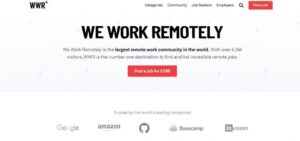
WeWorkRemotely describes itself as a platform for remote job opportunities, and that framing is important. It operates more like a remote employment marketplace than a traditional freelance site.
The distinction matters. If writing repeated proposals for short-term gigs sounds exhausting, WeWorkRemotely is structured differently. Companies post here for full-time remote roles, mostly permanent positions rather than project-based contracts.
The platform draws over 4.5 million monthly visitors and hosts listings from companies including Google, Amazon, and InVision. Employers pay between $350 and $450 to post a single job listing, which means the listings are not casual experiments. Companies using this platform are serious about hiring.
Coverage spans programming, design, sales, and marketing. For someone who wants the stability of employment with the flexibility of full remote work, this is a fundamentally different opportunity than most freelance platforms offer. It is worth understanding clearly before signing up, because the experience is different from gig-based freelancing.
Pros
- Major companies including Google and Amazon post here
- Employer-paid job listings filter out low-budget clients
- Broad skill coverage across tech, design, sales, and marketing
Cons
- Focused on full-time employment, not short-term projects
- Less suitable for people who prefer gig-style freelancing
- High competition for positions from well-known employers
YTJobs: Where YouTube Channels Hire
YTJobs is exactly what the name suggests, and it is more substantial than most people realize. The platform connects YouTube creators, including large and well-funded channels, with freelancers in video production, scriptwriting, thumbnail design, video editing, and related roles.
Channels like SypherPK, Lachlan, Jesser, Lexi Hensler, and Mr. Beast have hired through YTJobs. These are not small operations. They produce regular content at high volume and need reliable professionals to support that production.
Employers pay over $150 just to post a listing, which filters out clients who are not genuinely committed to filling the role. That cost creates a much lower noise-to-signal ratio compared to free job boards.
This is actually the platform I use when hiring for roles connected to my own channel. The quality of applicants tends to be higher, and the clients who post are generally clear about what they need. For anyone with video or creative skills looking to work in the YouTube space, this is the most direct route.
Pros
- Clients pay to post listings, which signals genuine hiring intent
- Access to large, well-funded YouTube channels
- Strong demand for video editors, writers, and thumbnail designers
Cons
- Limited to YouTube-adjacent creative roles
- Smaller overall job volume compared to general platforms
- Less useful for professionals outside of video and content creation
Catalant: Consulting for Professionals With Deep Expertise
Catalant sits in a different category from every other platform on this list. The focus is consulting, specifically high-value, project-based engagements with large organizations including Fortune 500 companies.
If your background is in strategy, finance, operations, or another specialized professional field, Catalant connects that expertise with companies that need it on a project basis rather than as a permanent hire.
One measurable example: Sean O’Dowd, a consultant who has used Catalant for several years, has earned over $567,000 through the platform working with enterprise clients. That is not an outlier fabricated for effect. It reflects what is possible when specialized knowledge meets clients who have the budget and the need to pay for it.
I first joined Catalant over five years ago. The platform is not for generalists. It rewards depth, credentials, and the ability to solve specific high-stakes business problems. For the right professional, the earning ceiling here is genuinely high.
Pros
- Fortune 500 clients with substantial consulting budgets
- Project-based work suits experienced professionals well
- High earning potential for the right specialization
Cons
- Not designed for generalists or creative freelancers
- Requires demonstrated expertise in a specific professional field
- Slower deal cycles compared to typical freelance platforms
Tool Stack Worth Using Alongside These Platforms
Picking the right platform is only part of the equation. The tools you use to manage your work and present yourself professionally make a real difference.
Notion is useful for tracking client communications, project timelines, and invoices across multiple platforms simultaneously. Loom allows you to send video walkthroughs to clients rather than writing long explanatory emails, which saves time and builds rapport faster. Bonsai or AND.CO handles contracts and invoices cleanly without requiring any legal background. Calendly removes the back-and-forth of scheduling by letting clients book directly into your available slots. For designers specifically, Behance running alongside Dribbble doubles your portfolio reach with almost no additional effort.
None of these tools are expensive, and several have free tiers sufficient for someone starting out. Getting this infrastructure in place before landing the first client saves a significant amount of confusion later.
Mistakes Beginners Make on These Platforms
Most people who sign up for these platforms and see little result are making one of a small number of predictable errors.
The most common one is treating the profile as an afterthought. On every platform listed here, the profile is the first impression. A generic bio with no specifics, no examples of past work, and no clear statement of what you actually do will produce almost no results regardless of how much you apply.
The second mistake is applying broadly rather than specifically. Sending the same generic message to fifty different job listings is less effective than sending five carefully written responses that directly address what each client described. Clients can tell the difference immediately.
Third, many beginners price too low, believing it increases their chances. On premium platforms like Toptal or MarketerHire, underpricing signals inexperience. Clients on those platforms are not looking for the cheapest option. Setting competitive rates from the start positions you correctly.
Finally, a lot of beginners quit too early. Most platforms take four to eight weeks before a profile gains meaningful visibility or the first legitimate inquiry arrives. Consistency during that period, continuing to improve the profile, post work, and apply selectively, is what separates people who eventually earn well from those who give up and conclude the platform does not work.
Final Thoughts
The eight platforms covered here offer something that the major general marketplaces largely do not: breathing room. Less crowding, better-quality clients, and in several cases, structural advantages like platform-managed billing or guaranteed rematching that make the freelance experience more sustainable.
The key is matching the platform to your actual skill set and situation. A developer chasing consistent remote work and a designer building a portfolio have different needs, and the right answer differs accordingly.
Pick one or two platforms from this list that align with what you do. Invest the time to build a profile that genuinely represents your capabilities. Apply selectively rather than broadly. And give it enough time to actually work.
Every person earning well through freelancing today started somewhere. The advantage of starting on a less-crowded platform is that the first win tends to come faster, and that first win changes everything.

Frequently Asked Questions
Q1. Which freelancing platform works best for someone with no prior experience?
Dribbble and WeWorkRemotely are the two most accessible starting points. Dribbble rewards the quality of the work itself rather than a history of client reviews. WeWorkRemotely attracts companies hiring for remote roles, some of which are explicitly open to candidates who are newer to formal employment but strong in their skill area.
Q2. Is it realistic to freelance full-time from day one?
For most people, starting part-time while maintaining another income source is the more stable path. The first one to three months on any platform involve building visibility and landing initial clients, which takes time. Once a steady flow of work is established, transitioning to full-time becomes much more manageable.
Q3. Do these platforms charge freelancers a percentage of earnings?
It varies. Toptal and MarketerHire allow freelancers to keep 100% of their earnings. General platforms typically take between 10% and 20%. YTJobs and WeWorkRemotely charge employers rather than freelancers. Reading the payment structure for each platform before investing significant time there is worth doing.
Q4. How long does it typically take to land the first paid project?
On open community platforms like Dribbble or Webflow Experts, the first inquiry can come within a few weeks if the profile and portfolio are strong. On selective platforms like Toptal, the screening process itself takes two to four weeks before you are even eligible for client matching. Planning for a realistic timeline of one to two months before earning the first payment prevents early discouragement.
Disclaimer
The information shared in this article is based on personal research and general experience. I have written this article to help people who are genuinely looking to learn not to make any guarantees about results or earnings.
Everyone’s situation is different. What works for one person may not work exactly the same way for another so please use your own judgment before making any decisions based on what you read here.
Some of the tools, platforms, or methods mentioned in this article may change over time. I do my best to keep things accurate but I can’t guarantee that every detail stays up to date forever.
This article is for informational purposes only and it is not professional financial, legal, or business advice. If you’re making serious decisions especially around money or business please consult a qualified professional.
If there are any affiliate links or sponsored mentions in an article they will be clearly disclosed. I only recommend things I genuinely believe are useful.
Thanks for reading and I hope you found something valuable here.
Found this guide useful? Share it with someone who is thinking about starting freelancing. And if you have a question about getting started — drop it in the comments. Real questions get real answers.
 Abdullah Waheed