

Best Platforms to Sell Digital Products and Reach Buyers for Free
Here is what usually happens. Someone spends weeks building a digital product, puts it on their own website, shares it once on social media, and then waits. Nothing. Two sales to a cousin. Shop closed by month two.
The product was probably fine. The location was the problem.
Selling digital downloads on a personal site without an existing audience is genuinely hard. You are asking people to find you when no one knows you exist. Marketplaces fix that. They already have the buyers. You just need to show up with something worth buying.
Below are the best places to sell digital products, whether you make SVG files, Canva templates, fonts, ebooks, or printables. Each one brings organic traffic you do not have to pay for.
Before picking a platform it helps to know how to set your product up the right way. Here is a complete guide on “How to create and sell digital products on Gumroad”

Quick comparison
| Platform | Best For | Competition |
|---|---|---|
| Etsy | Printables, SVG files, planners | High |
| Gumroad | Courses, ebooks, templates | Medium |
| Creative Fabrica | Craft files, cut files, fonts | Medium |
| Creative Market | Fonts, graphics, design assets | Medium |
| Envato Market | Themes, code, video assets | High |
| Design Bundles | Fonts, graphics, templates | Low |
| BrandCrowd | Logos, brand identity | Low |
| DeviantArt | Digital art, illustrations | Low |
1. Etsy
Etsy is where most beginners should start. It began as a handmade goods site but now fully supports digital downloads, and that category has grown a lot. Printables, wall art, planners, SVG cut files, and Canva templates are among the strongest product types here.
According to Similarweb, Etsy ranks among the top global e-commerce destinations by monthly visits. The buyers arrive with intent. They are not scrolling out of boredom. They are searching for something specific and are already in buying mode.
A teacher started uploading classroom worksheet bundles in her spare time. Eight months later, the shop was earning more than her part-time job, with zero ad spend. She simply found search terms that bigger sellers had overlooked.
2. Gumroad
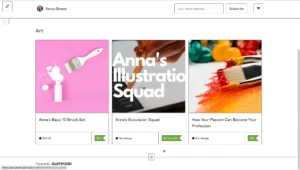
Gumroad is the easiest starting point if you want to go live fast. No approval process. No complicated setup. You upload a product, set a price, and you are selling. It draws tens of millions of monthly visitors through its own discovery pages.
What makes it stand out is how well it converts outside traffic. If you have a modest social following or email list, pointing people to a Gumroad listing works extremely well. The checkout is clean and there is almost no friction between finding your product and paying for it.
A freelance writer with roughly 3,000 followers launched a writing template pack. Forty sales in the first week from her own audience, then steady organic sales from Gumroad’s marketplace pages for months after.
3. Creative Market
Creative Market has earned its reputation as a trusted destination for design resources. The audience is largely designers, content creators, and small business owners who buy regularly. Fonts, graphics, templates, photos, and web assets all do well here.
One thing that became obvious after looking at successful shops: the sellers doing best are not always the most talented. They picked a specific niche and kept producing for it. Consistency beats raw skill most of the time on this platform.
A designer narrowed her entire shop to social media templates for real estate agents only. Very specific. Within a year, it was generating a reliable monthly income without a single paid ad.
4. Creative Fabrica
Creative Fabrica has built a loyal base in the crafting world. If your products target people who use cutting machines, embroidery software, or similar tools, this is one of the most focused audiences available online. SVG cut files, knitting patterns, embroidery designs, and craft fonts all perform well here.
The buyers return regularly. A good product keeps earning long after it is first uploaded, which is exactly what you want from a passive income model.
5. Envato Market
Envato is a network of specialized storefronts. ThemeForest handles WordPress themes. CodeCanyon covers scripts and plugins. GraphicRiver takes fonts and printables. VideoHive is for motion graphics. Each has its own audience and its own standard.
The bar here is noticeably higher than most platforms on this list. From my experience studying what actually sells here, it rewards technical depth far more than general graphic skill. Developers and motion designers build stronger income streams on Envato than generalist creators usually do.
6. Design Bundles
Design Bundles draws over two million monthly visitors according to Similarweb, but has far fewer active sellers than Creative Market or Etsy. That gap is useful. New listings stay visible longer and there is less pressure pushing your products off the front page within hours.
For someone just starting out, lighter competition makes early traction more achievable.
7. BrandCrowd
BrandCrowd focuses almost entirely on logos and brand identity assets. The buyers arriving here are small business owners who need a logo and are ready to spend, not casually browsing. According to Similarweb, it draws over two million monthly visitors within that very specific niche.
For a logo designer, the buyer’s intent is a far better environment than competing on a general marketplace where logos sit next to completely unrelated products.
Which platform should you actually start with?
Start with Etsy if you sell printables, SVG files, planners, or wall art and want organic search traffic from day one.
Start with Gumroad if you have any social media audience or email list, even a small one. It converts outside traffic better than anything else here.
Start with Creative Fabrica if your products serve the craft and DIY community. The audience is focused and keeps coming back.
Start with Envato if you build professional-grade themes, plugins, or motion graphics and your work can pass a quality review.
Pick one or two platforms. Go deep. The sellers building real income are the ones who learn one marketplace well, optimize properly, and keep adding products over time.

Frequently asked questions
Q1: Can I sell the same product on more than one marketplace?
Yes, usually. A few platforms require exclusivity, so check the seller’s terms before cross-listing. Most do not restrict it at all.
Q2: Do I need design experience to get started?
Not necessarily. Many successful sellers use Canva, Figma, or Inkscape without formal training. What matters more is whether the product serves a clear need for a specific buyer.
Q3: How do these platforms pay sellers?
Most use PayPal, Stripe, or direct bank transfer. Schedules vary — some pay weekly, others monthly. Always check payout thresholds before committing time to a platform.
Q4: Is the passive income claim realistic?
Largely yes. Once a product is live and listed properly, each sale requires no extra work from you. The upfront effort is in creating the product and writing a strong listing. After that, income can continue without ongoing effort per sale, although adding new products regularly tends to improve long-term results considerably.
Final thoughts
Building income from digital products is one of the more realistic side income models available right now. Products scale without restocking. Delivery is instant. And the marketplaces above already have the buyers.
What they do not have is your product. That part is still on you.
Start somewhere. Upload something real. Pay attention to what buyers in that marketplace are actually searching for and adjust from there. The sellers making consistent money from digital products are not always the most talented. They are the most consistent.
Disclaimer
We are not affiliated with or sponsored by any platform mentioned. Traffic figures referenced from Similarweb and are approximate estimates only.
The information provided in this article is for educational and informational purposes only. Any earnings, statistics, performance figures, tool recommendations, or examples mentioned are based on publicly available information, personal opinions, industry trends, or general research
 Abdullah Waheed